 01
01Access
Working room measured in inches
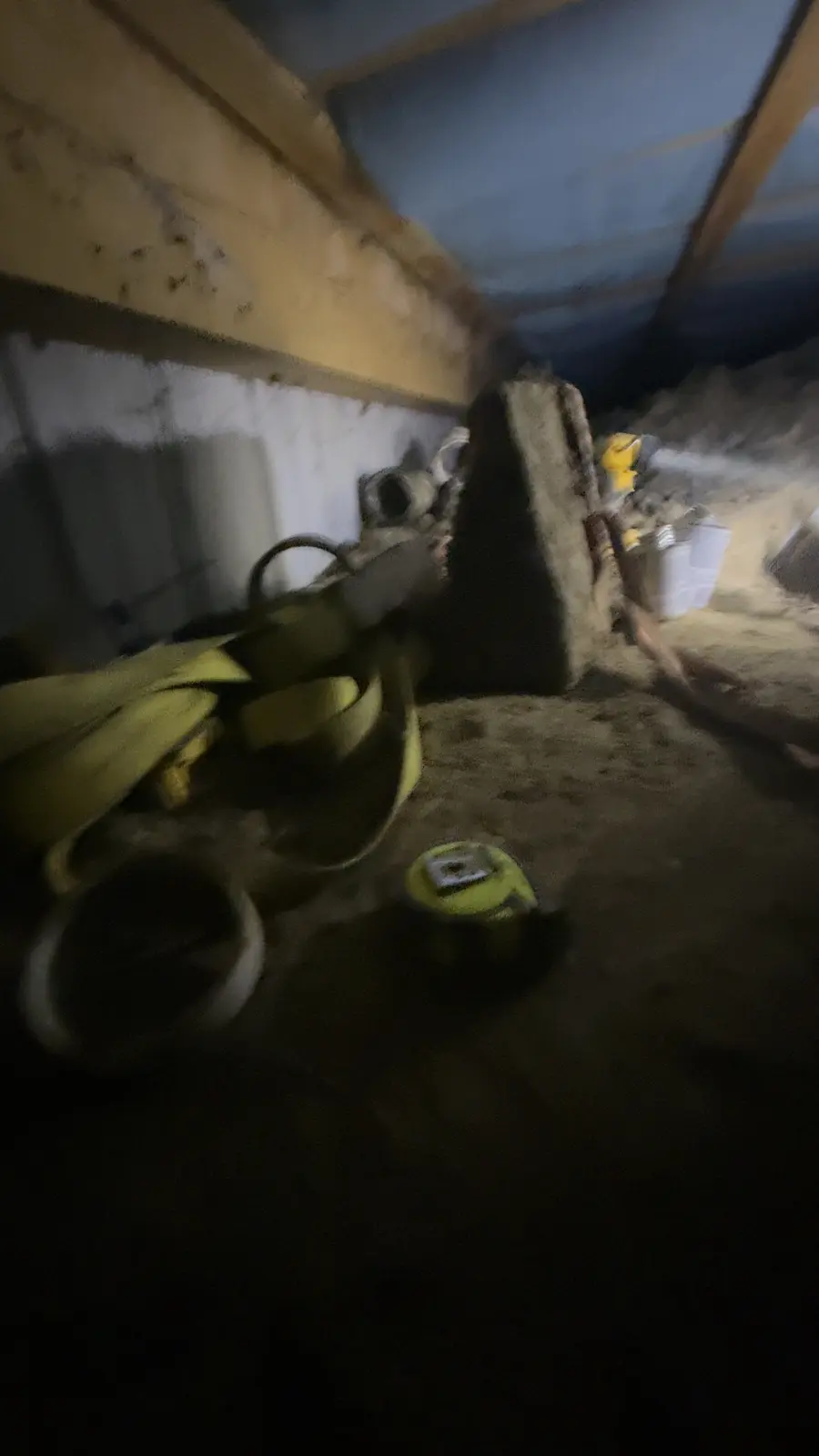
The failed septic run sat beneath the main deck in a confined crawlspace. Reaching it meant moving through a low, narrow work area before excavation could even begin.
 AMBROSEPROPERTY SOLUTIONSProject case study
Project case study · Northern Maine · January
A disconnected septic line caused sewage to back up into the basement. Locating and repairing it required a 30-foot search beneath the main deck, hand excavation through frozen ground, and careful work 3½ feet below grade.
Back to the main website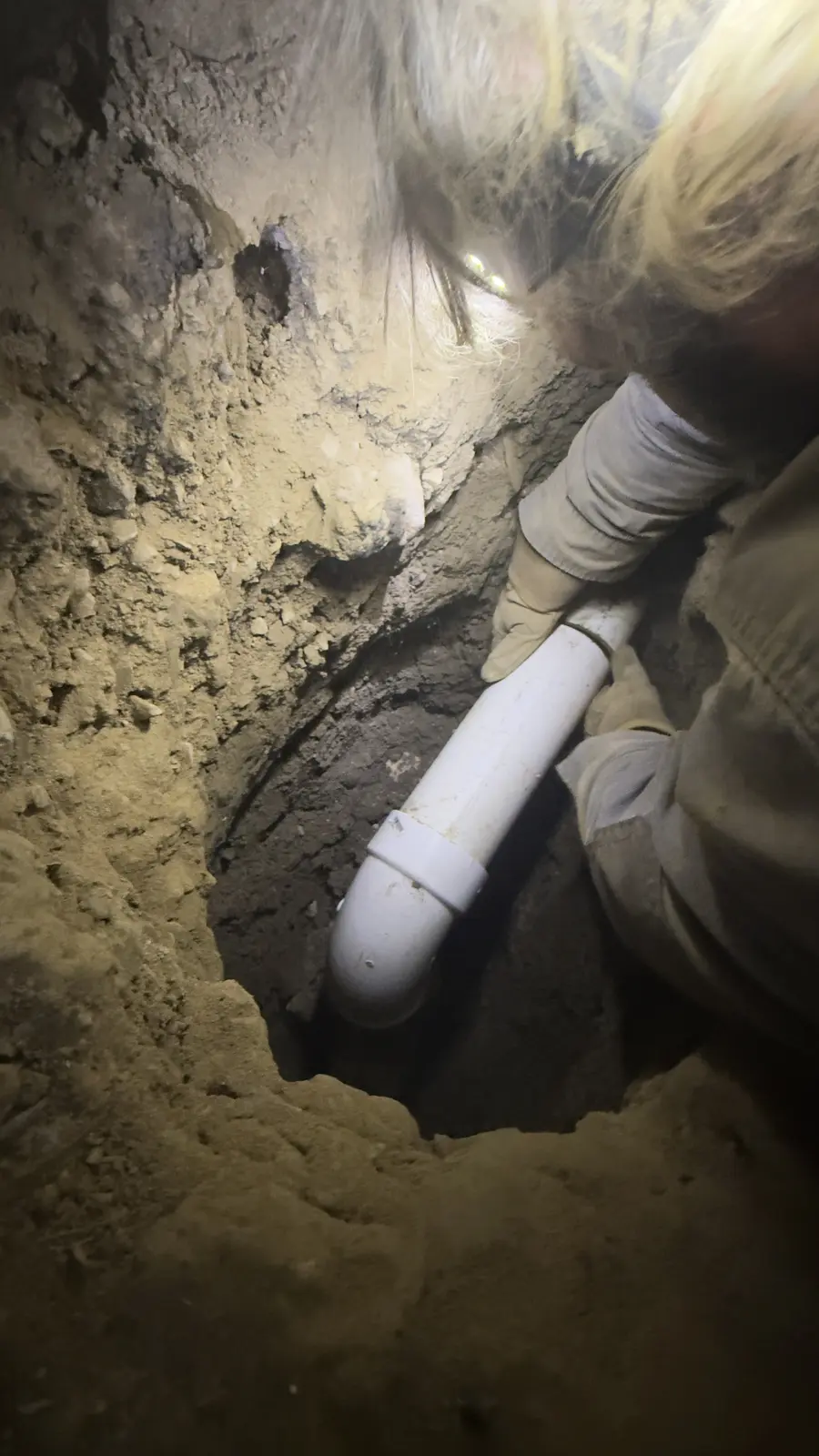
The job
The conditions were rough, the access was restricted, and the failed section was buried deep under frozen ground. The job was handled in four clear stages.
01Access
The failed septic run sat beneath the main deck in a confined crawlspace. Reaching it meant moving through a low, narrow work area before excavation could even begin.
02Excavation
The search area extended roughly 30 feet from the house. About a foot of ground was frozen solid, requiring a pickaxe and hand excavation to reach the line approximately 3½ feet below grade.
 03
03Diagnosis
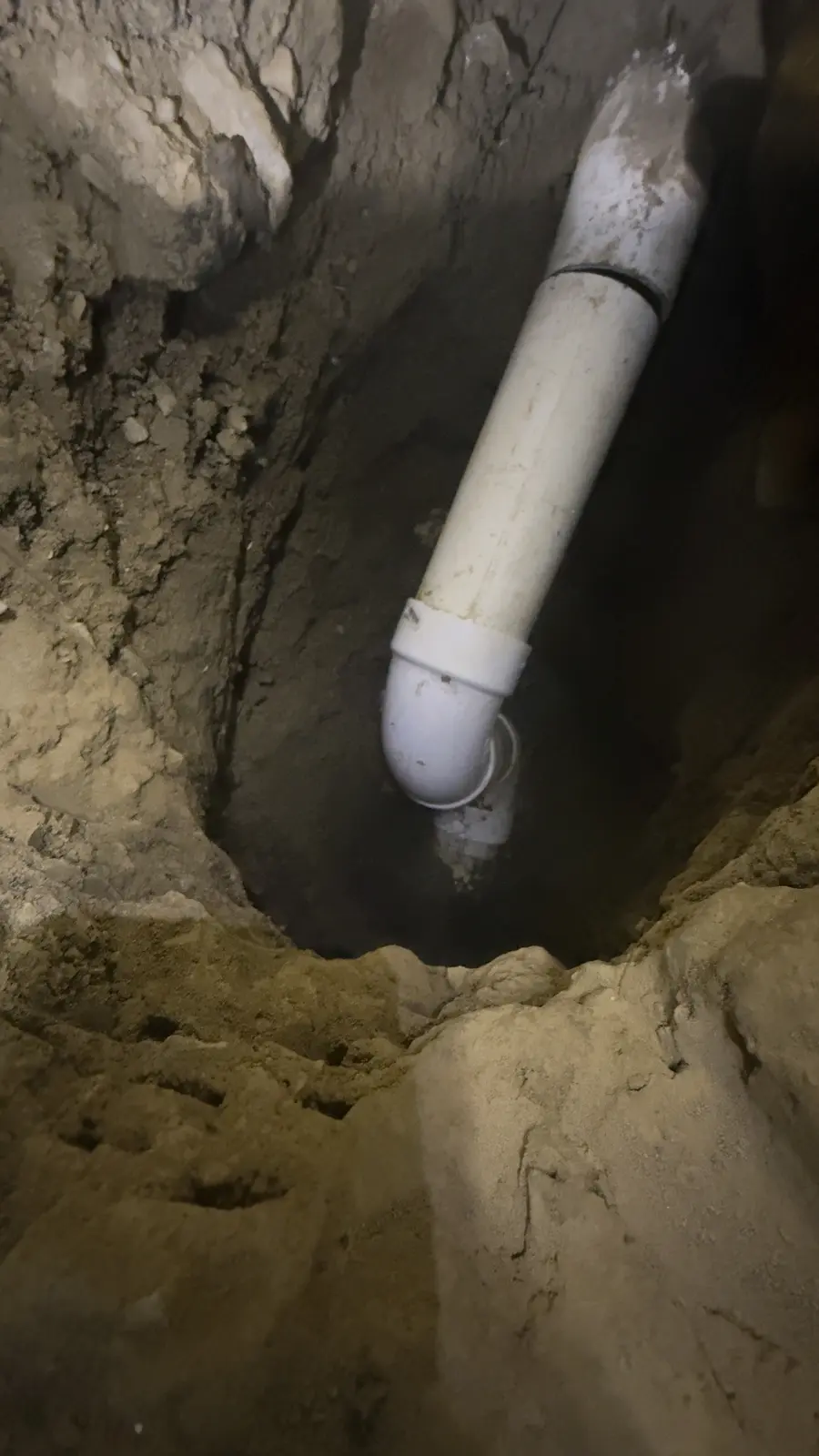
The line failure had allowed septic waste to back up into the basement, creating hazardous conditions. Once the pipe was uncovered, the failed connection could be isolated and prepared for repair.
 04
04Repair
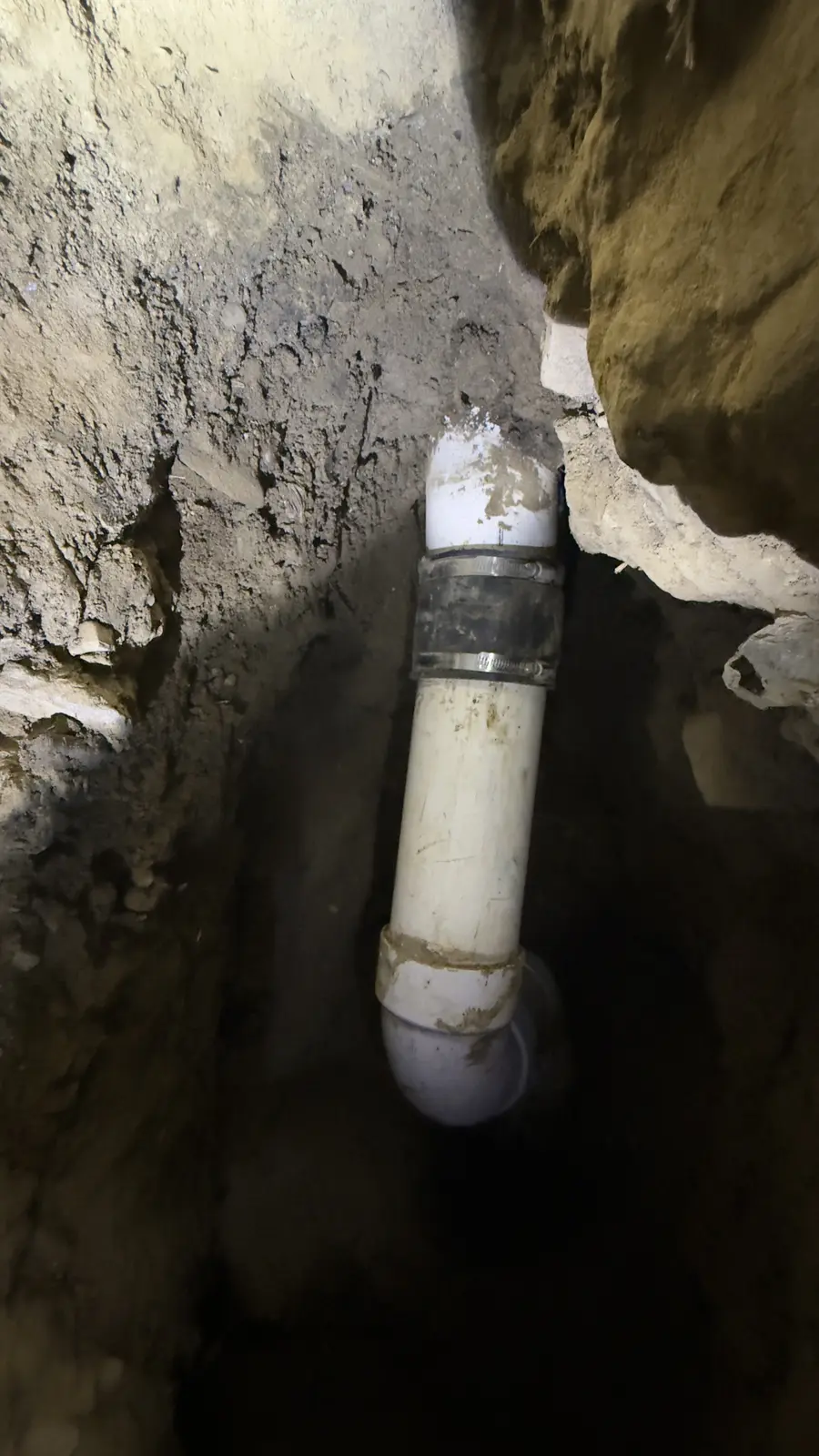
The damaged connection was rebuilt with a shielded coupling, secured in the excavation, and checked before the site was ready to be closed back in.
Result